


Discover why this remarkable private reserve has earned a reputation for exceptional leopard sightings.
For many safari enthusiasts, few wildlife encounters compare to seeing a leopard in the wild. Secretive, intelligent and beautifully adapted to life in the bush, leopards are often regarded as the most elusive of the Big Five.
While leopard sightings are never guaranteed, some destinations consistently offer better opportunities than others. The Timbavati Private Nature Reserve, which forms part of South Africa’s Greater Kruger ecosystem, has become renowned for its healthy leopard population and remarkable sightings.
So what makes this landscape so well suited to these magnificent cats?
The Perfect Habitat
The Timbavati offers exactly the kind of habitat leopards favour.
The reserve combines dense riverine thickets, mature trees, open woodland, rocky outcrops and seasonal drainage lines, creating ideal conditions for hunting, resting and raising cubs.
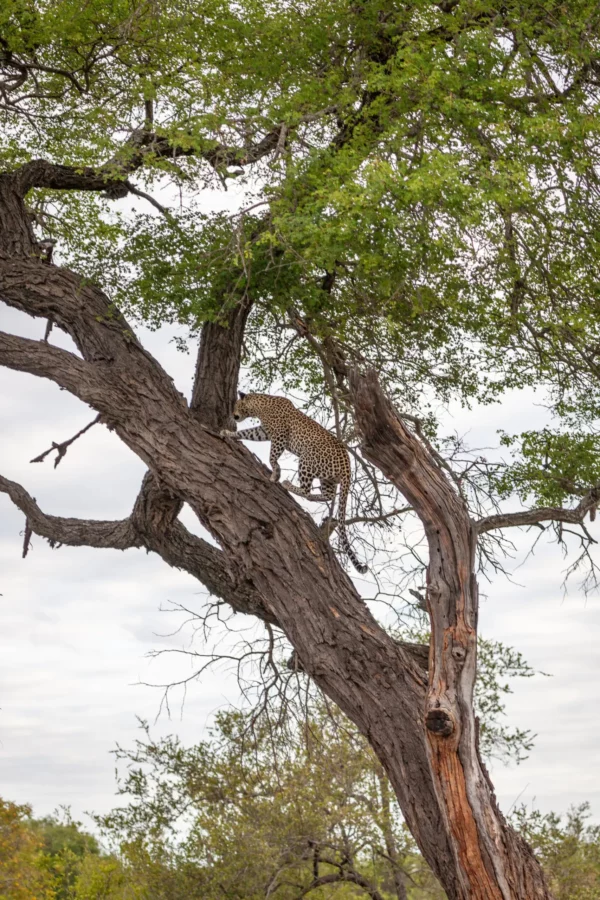
Large marula, leadwood and jackalberry trees provide safe places to cache prey away from scavengers, while thick vegetation allows leopards to stalk antelope with remarkable stealth.
This diversity of habitats supports healthy populations of impala, bushbuck, duiker and other prey species that form an important part of the leopard’s diet.
Part of the Greater Kruger Ecosystem
One of Timbavati’s greatest strengths is its connection to the Greater Kruger ecosystem.
Because there are no fences separating the reserve from Kruger National Park, wildlife moves freely across this vast protected landscape. Leopards are able to establish natural territories, disperse between suitable habitats and maintain healthy genetic diversity without artificial barriers.
This ecological connectivity contributes to a thriving predator population and supports the long-term conservation of the species.
Why Are Leopards So Difficult to Spot?
Leopards are masters of camouflage.
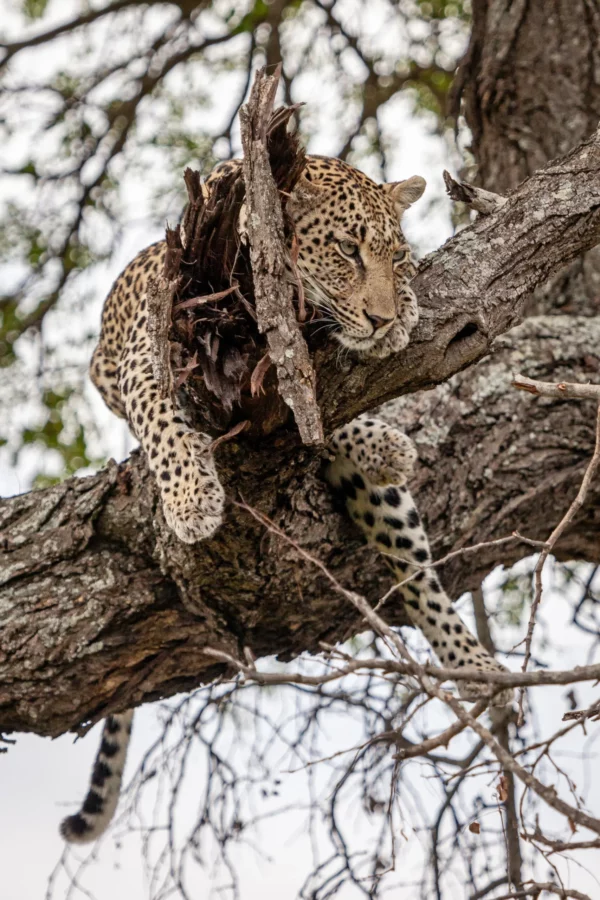
Their rosette-patterned coats blend seamlessly into woodland, rocky outcrops and riverine vegetation, allowing them to move almost unnoticed through their environment. Unlike lions, which often rest openly on the savanna, leopards prefer cover and spend much of the day hidden beneath dense vegetation or resting in large trees.
hey are primarily solitary animals, hunting alone and moving quietly through established territories. Their secretive nature is one of the reasons every leopard sighting feels so rewarding.
Expert Guides and Highly Skilled Trackers
Exceptional leopard sightings are about more than simply being in the right place.
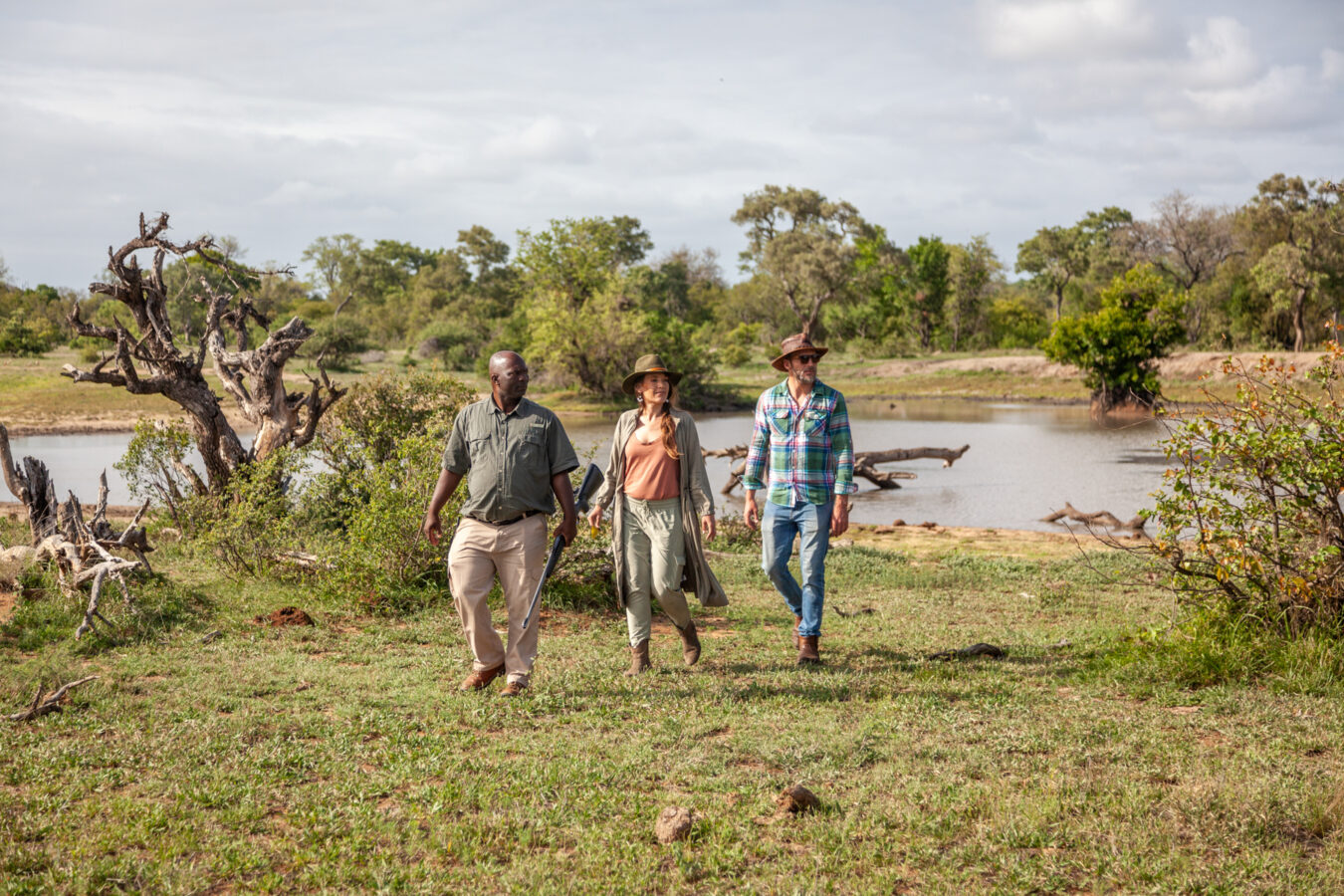
At Kings Camp, experienced guides and trackers work together using years of field knowledge to interpret the subtle signs that many visitors would never notice.
Fresh spoor in the sand, alarm calls from impala or monkeys, scent-marking behaviour and recent movement patterns all provide clues that help guides build a picture of where a leopard may be moving.
Tracking is a skill developed through patience, observation and an intimate understanding of the bush. Every successful sighting reflects this knowledge as much as it does good fortune.
Why Leopard Sightings Are So Strong in the Timbavati
The Timbavati has earned a well-deserved reputation as one of Africa’s premier destinations for leopard viewing.
Several factors contribute to this:
- Healthy, connected leopard populations
- Excellent habitat with dense woodland and river systems
- Abundant natural prey
- Professional guides and experienced trackers
- Carefully managed game drive experiences that prioritise respectful wildlife viewing
Unlike busy public parks, safari experiences within the private reserve are quieter and more considered. With fewer vehicles at sightings and experienced guides interpreting animal behaviour, guests are often able to spend extended periods observing leopards as they move naturally through the landscape.
Leopard Behaviour Through the Seasons
Leopards can be seen throughout the year, although their behaviour changes with the seasons.
During the cooler winter months, other wildlife often concentrates around water, making predator movements slightly easier to predict.
In summer, lush vegetation provides greater cover, while the arrival of young antelope offers plentiful hunting opportunities. Although sightings may require more patience, the green season reveals fascinating interactions between predators and their changing environment.
Every season offers something unique, which is why no two leopard sightings are ever the same.
Viewing Leopards Responsibly
At Kings Camp, wildlife encounters are guided by respect for the animals and their environment.
Vehicles are positioned carefully to minimise disturbance, allowing leopards to behave naturally. Guides prioritise animal welfare over photographs, ensuring that sightings remain calm and ethical.
This approach not only protects wildlife but often leads to richer, more authentic experiences for guests.
Experience the Timbavati’s Leopards with Kings Camp
Watching a leopard emerge silently from the bush or climb effortlessly into a tree is one of Africa’s great wildlife experiences.
The combination of outstanding habitat, expert guiding and a healthy wilderness ecosystem has made the Timbavati one of the best places to see leopards in Africa. Every game drive offers the possibility of witnessing these remarkable cats behaving exactly as nature intended.
If you’d like to experience a leopard safari in the Timbavati, we’d be delighted to help you plan your stay. Contact our reservations team at book@kingscamp.com to begin planning your safari.
Image credits
Albie Venter
Cathan Moore
Jason Street
FAQs
Why is the Timbavati one of the best places to see leopards in Africa?
The Timbavati combines ideal leopard habitat, abundant prey, expert tracking and a protected wilderness connected to the Greater Kruger ecosystem, resulting in consistently excellent leopard sightings.
Are leopards commonly seen in the Timbavati?
While wildlife sightings are never guaranteed, the Timbavati is widely regarded as one of South Africa’s top destinations for leopard sightings.
What makes leopards difficult to spot?
Leopards are solitary, highly camouflaged predators that spend much of their time resting in dense vegetation or trees.
When is the best time to see leopards in South Africa?
Leopards can be seen year-round, although the dry winter months often provide slightly easier viewing conditions.
How do safari guides find leopards?
Guides and trackers use spoor, alarm calls, animal behaviour and years of experience to interpret where leopards may be moving.
Can you see the Big Five as well as leopards in the Timbavati?
Yes. The Timbavati forms part of the Greater Kruger ecosystem and is home to all of the Big Five, along with cheetah, wild dog and abundant birdlife.