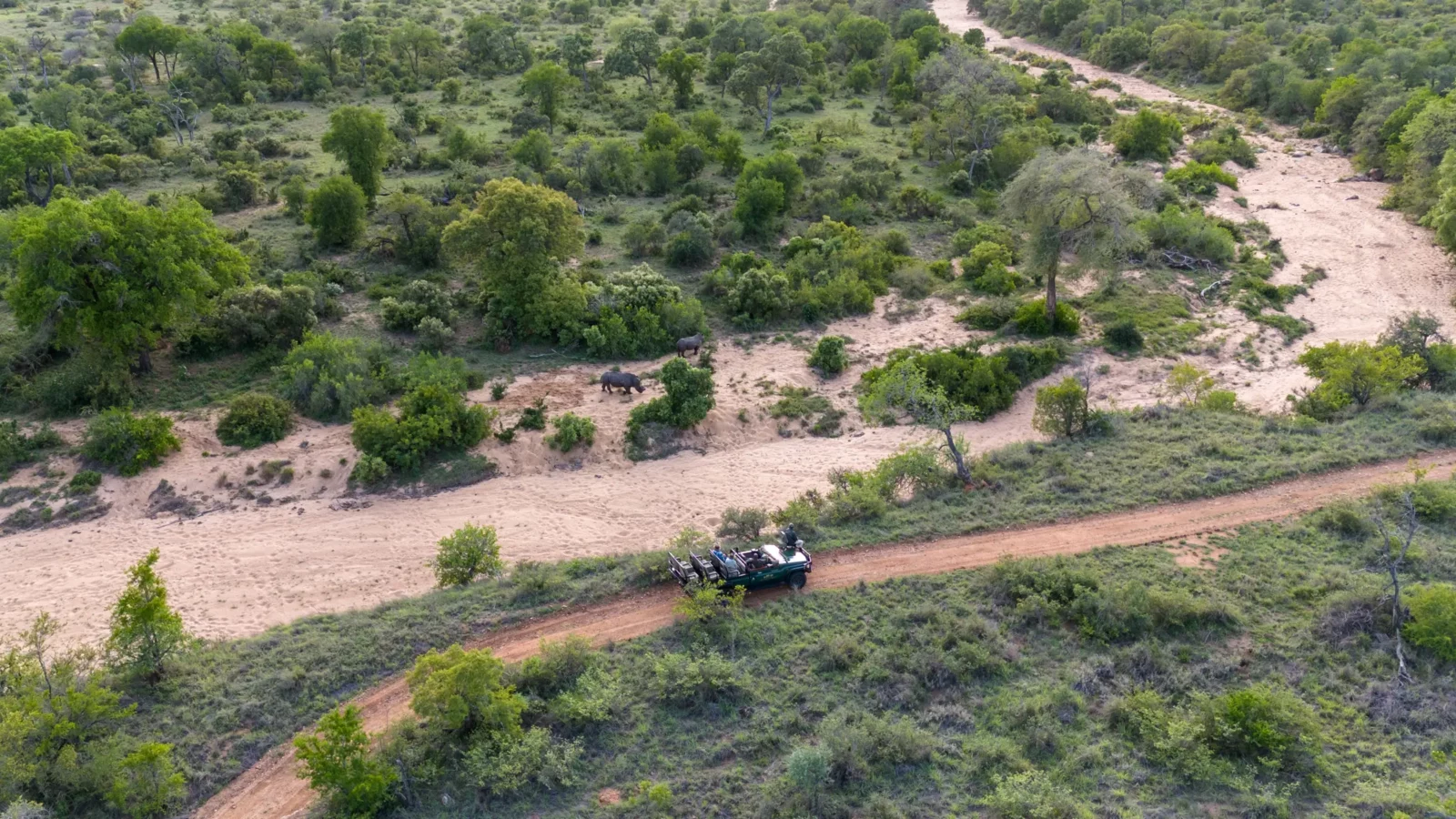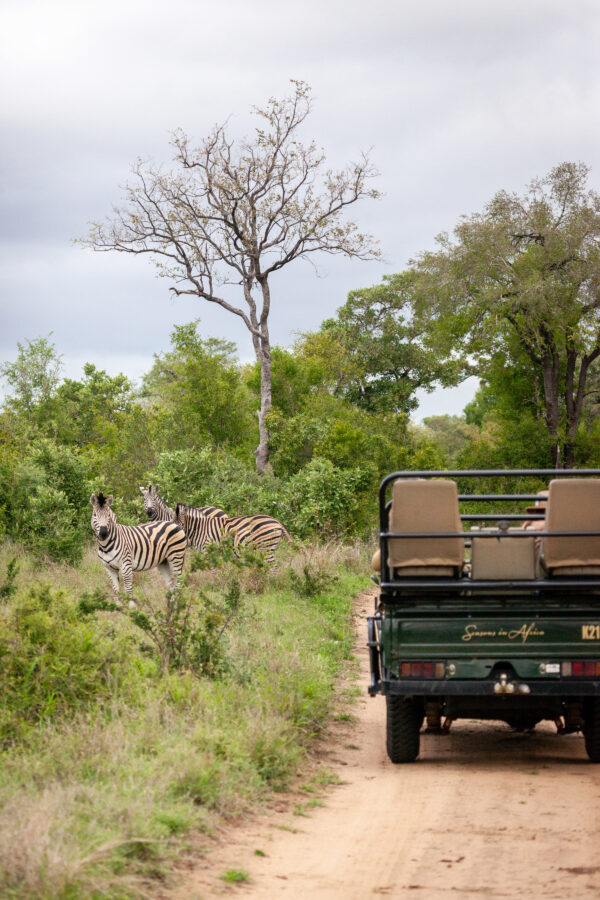



Beyond the wildlife, the Timbavati’s trees are part of the story, shaping the landscape and sustaining the animals that call it home.
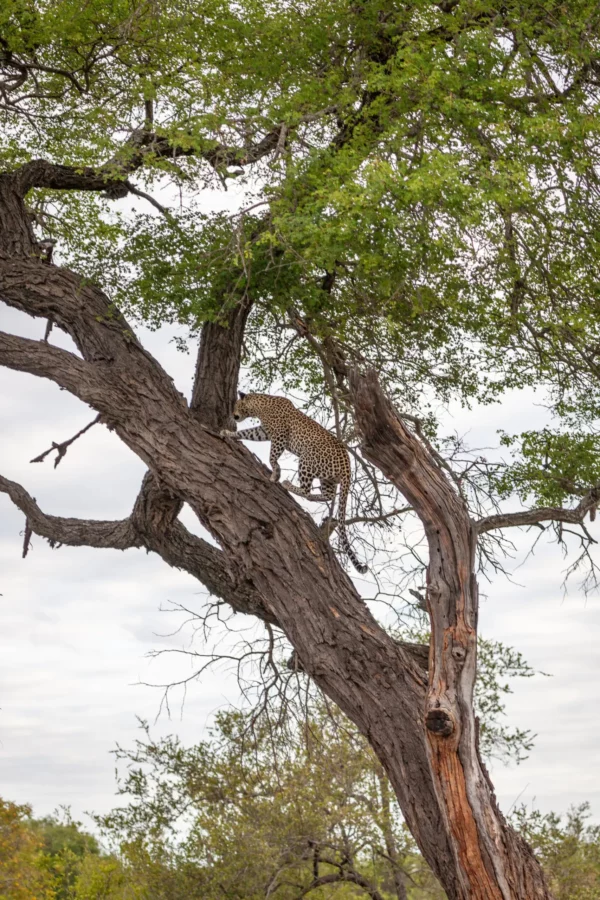
When you think about a safari in the Timbavati, trees might not be the first thing that comes to mind. Perhaps it is the sight of an elephant disappearing into the bush, a leopard draped across a branch or a herd of buffalo moving slowly across the grassland. Yet look a little more closely at the landscape and you begin to realise that the trees are woven into almost every part of the story.
They provide food for browsers, fruit for mammals and birds, shade from the Lowveld sun and shelter for nesting birds and smaller animals. Their roots help hold soil in place, their fallen leaves return nutrients to the ground and, when trees die, their trunks can continue to play an important role in the ecosystem.
The Timbavati forms part of the Greater Kruger ecosystem, and its vegetation reflects this remarkable ecological diversity. The reserve’s landscape is shaped by ancient granite and gneiss formations, which have weathered over time to create sandy, relatively nutrient-poor soils. Mopane, marula and leadwood are among the trees that dominate parts of the woodland, while river systems support lush vegetation and fig trees.
Across the wider Kruger, more than 300 tree species have been recorded, demonstrating just how varied the bushveld can be. So, which trees should you look out for?
The Marula: The Tree of Life
(Sclerocarya birrea)
Few trees are as closely associated with the Lowveld as the marula. With its broad, spreading crown and distinctive mottled, pale-grey bark, it is one of those trees that can quickly become a familiar landmark on a game drive. It is also one of the important woodland species of the Timbavati, where its presence is woven into the lives of countless animals.
The marula is sometimes referred to as the “tree of life”, and with good reason. Its leaves, bark, fruit and even fallen branches all contribute to the wider ecosystem, providing food, shelter and resources for an impressive range of species.
General Characteristics
The marula is a large, deciduous tree that can grow to around 18 metres tall. It usually has a stout, often branching trunk and a broad, rounded crown, with pale grey bark that flakes away in irregular patches as the tree matures.
One of its more unusual characteristics is that marula trees are dioecious, meaning individual trees are either male or female. Only female trees produce fruit, and during the warmer months they can be laden with the yellow-skinned, white-fleshed fruits for which the species is famous.
The fruit is surprisingly nutritious, containing high levels of vitamin C, while the hard stone inside contains edible, protein-rich kernels. For wildlife, however, it is simply another valuable seasonal food source.
A Favourite on the Safari Menu
Marula trees support wildlife in several different ways throughout the year. Elephants browse on the foliage, branches and bark, while other browsers, including giraffe and kudu, make use of the leaves and shoots.
When the fruit ripens, the tree’s importance extends beyond browsers. Fallen marula fruit attracts a variety of animals, including elephants, warthogs, baboons and monkeys, turning the ground beneath a fruiting tree into a busy feeding area.
This seasonal abundance is an important part of the rhythm of the bushveld. Food availability changes throughout the year, and fruiting trees can become temporary focal points for wildlife.
Elephants and the Marula
The relationship between elephants and marula trees is particularly interesting because it demonstrates just how closely wildlife and vegetation are connected.
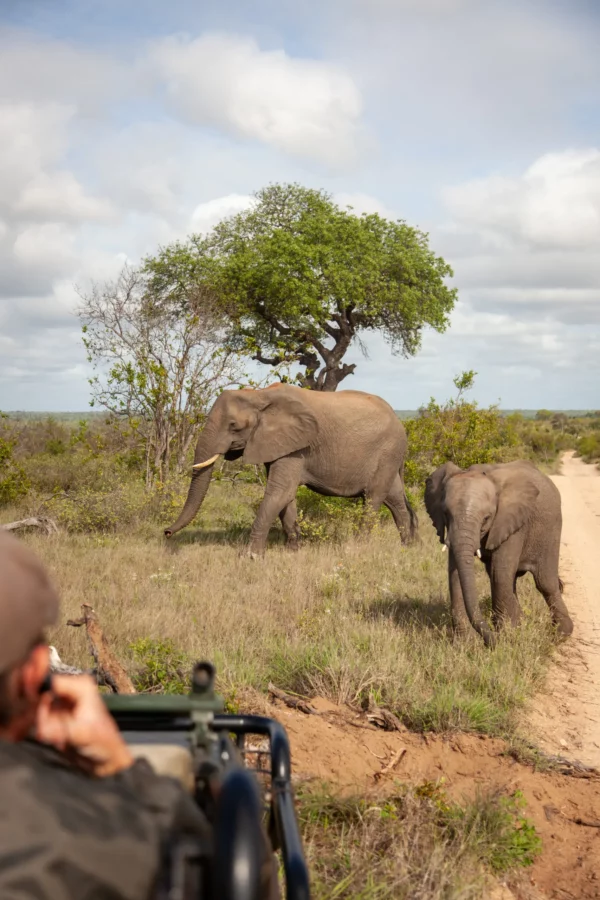
Elephants can feed extensively on marulas, stripping bark, breaking branches and sometimes pushing over mature trees. In areas with high elephant concentrations, this pressure can have a significant effect on the structure and regeneration of marula populations.
Young trees face another challenge. Browsing animals can feed on saplings before they have the opportunity to mature, creating a regeneration bottleneck in some areas.
It is a useful reminder that conservation is not simply about protecting individual species. Managing a healthy ecosystem means understanding the relationships between animals, trees, soil, water and the availability of food.
The Great Marula Myth
And then there is the story that has made the marula famous far beyond Africa: the supposedly drunken elephant.
The popular bush legend suggests that elephants become intoxicated after eating large quantities of fermented marula fruit. It makes for a wonderful safari story, but the science is considerably less entertaining. For an elephant to consume enough alcohol from naturally fermenting fruit to become visibly intoxicated would require an enormous quantity of fruit, and fresh ripe fruit is generally more appealing to elephants anyway.
So, while you may hear the story around the campfire, the reality is rather more interesting. The marula’s real significance lies not in making elephants drunk, but in the enormous number of ways this one species supports life in the Lowveld.
The Leadwood: Built to Last
(Combretum imberbe)
The leadwood is one of the most remarkable trees you may encounter in the Timbavati. It has an almost sculptural quality, with its pale, weathered trunk and sturdy branches standing out among the surrounding vegetation.
Its wood is exceptionally dense and hard. So dense, in fact, that it is said to sink in water. But its greatest contribution may begin after the tree has died.
General Characteristics
Leadwood is a slow-growing evergreen or semi-evergreen tree with a dense crown and a characteristically dark, rough bark. It can reach impressive sizes and is found in a range of habitats across the Greater Kruger ecosystem, including woodland and areas close to drainage lines.
Its extremely dense heartwood makes it highly resistant to decay. While many dead trees quickly collapse and return their nutrients to the soil, leadwood can remain standing for many years after death..
Life After Death
In the bush, a dead tree is not necessarily a dead ecosystem. A standing leadwood can remain part of the landscape long after its leaves have disappeared. Its branches and hollows provide opportunities for nesting birds, while insects, reptiles and other small creatures make use of the cavities and crevices created as the tree ages.
This makes the leadwood a wonderful example of an ecological principle that is easy to overlook on safari: a tree can continue to contribute to an ecosystem long after it has stopped growing.
A Tree That Tells a Story
Leadwoods are also useful landmarks on a game drive. Their pale trunks and often distinctive, weathered appearance can make them relatively easy to pick out once you know what to look for.
Your Naturalist Guide may point out a particularly old specimen and explain how long it may have stood in the landscape. Suddenly, what initially looked like an old dead tree becomes something rather different: a living record of the bushveld’s past and a habitat in its own right.
The Mopane: The Woodland Specialist
(Colophospermum mopane)
The mopane is one of the trees that gives large parts of the Greater Kruger their distinctive character. In the northern regions of Kruger National Park, mopane woodland becomes particularly dominant, creating a landscape that looks and feels quite different from the open thornveld found further south.
Mopane is also one of the woodland trees identified as dominant within the Timbavati landscape, making it an important species to recognise while exploring the reserve.
How to Recognise a Mopane
The easiest way to identify a mopane is to look at its leaves.
Each leaf consists of two leaflets joined at the base, giving it a distinctive shape that is often compared to a butterfly. Once your guide has pointed one out, you will probably start noticing them everywhere.
Mopane can grow as either a relatively small, multi-stemmed shrub or a substantial tree, depending on its environment and growing conditions. Large areas can form almost continuous mopane woodland, particularly where the underlying soils and geology favour the species.
A Tree Shaped by Its Environment
One of the most interesting things about mopane is that its distribution is a reminder that the bushveld is not uniform.The Greater Kruger is made up of an intricate mosaic of soils, geological formations, drainage patterns and vegetation communities. The availability of water and nutrients, together with rainfall and fire, influences which plants can thrive in a particular area.
The Timbavati’s landscape itself is shaped by ancient granite and gneiss, with sandy, relatively nutrient-poor soils contributing to its characteristic savanna vegetation.
In other words, when you look at a stretch of mopane woodland, you are also looking at clues about what lies beneath your feet.
The Elephant Effect
Mopane is also closely linked to elephants.
Elephants browse woody vegetation extensively, feeding on leaves, branches and bark and sometimes breaking or pushing over trees. Over time, this can change the density and structure of woodland.
This means elephants are not simply inhabitants of the mopane landscape. They are also landscape engineers, helping to shape the vegetation communities through their feeding behaviour.
The result is an ongoing relationship between tree growth, herbivore pressure, rainfall, fire and regeneration, all playing out over years and decades.
The Knob-thorn: A Favourite of Browsers
(Senegalia nigrescens)
The knob-thorn is one of the quintessential trees of the African bushveld. Its characteristic thorns and knobbly trunk make it an interesting tree to learn to identify, but its real importance lies in the many different roles it plays within the ecosystem.
It occurs widely across the Greater Kruger and is recognised among the important tree species of the region.
General Characteristics
The knob-thorn can grow into a substantial tree with a broad crown. Its name comes from the distinctive knob-like swellings found on its branches and trunk, together with its formidable thorns.
Like many thorn trees, these physical characteristics are part of the species’ strategy for surviving in an environment where browsing animals are constantly looking for their next meal.
But thorns are only part of the story.
A Favourite for Browsers
The leaves, young shoots and pods of the knob-thorn provide food for a variety of herbivores.
Giraffe can reach foliage high in the canopy, while elephants and other browsers can feed on lower branches. Kudu and other antelope also make use of the tree’s available browse.
The tree therefore becomes part of the seasonal food landscape, with different animals exploiting different parts of it.
More Than Food
A mature knob-thorn can also provide something equally important: structure.
Large trees can offer nesting sites for birds, including birds of prey, while the thorny branches provide shelter and protection for smaller animals.
This is one of the easiest ways to understand the ecological importance of individual trees. A tree does not have to be eaten to be useful to wildlife. It can provide a place to nest, hide, rest, hunt from or shelter beneath.
On safari, learning to look at a tree this way changes things. Instead of asking simply, “What tree is that?”, you start asking, “Who is using it?”
Tamboti: Beautiful but Toxic
(Spirostachys africana)
The tamboti is one of those Lowveld trees that rewards a closer look. At first glance, it may simply appear to be another part of the bushveld woodland, but it has some fascinating characteristics and plays an important role in the ecosystem.
The species occurs across the Greater Kruger and is included among the notable tree species of the region.
General Characteristics
Tamboti is a medium-sized tree with a rounded crown and distinctive foliage. It is often associated with deeper, heavier soils and can occur along drainage lines and in valleys where conditions differ from the surrounding woodland.
Like many African trees, its appearance can vary depending on its growing conditions, which makes learning to identify it a useful exercise in observation.
A Tree on the Menu?
Tamboti leaves are browsed by a range of herbivores, including elephants, giraffe, kudu, eland, nyala, impala and bushbuck. That might seem surprising given one of the tree’s most famous characteristics: its milky latex is toxic and can cause severe irritation.
Yet nature rarely works in simple absolutes. A plant can contain defensive chemicals while still forming part of the diets of animals that have evolved alongside it. Herbivores have different feeding strategies and tolerances, and the ecological relationship between plants and browsers is far more nuanced than simply “edible” or “poisonous”.
An Island of Fertility
Trees also have an influence that is less immediately obvious.
Beneath a mature tree, fallen leaves, branches and other organic material accumulate. The shade alters the temperature and moisture of the soil, while nutrients are gradually returned to the ground as plant material decomposes.
These conditions can create small patches of comparatively fertile soil beneath and around trees, sometimes described by ecologists as “islands of fertility.”
Jackalberry: Life Along the Waterways
(Diospyros mespiliformis)
The jackalberry introduces another important element into our story: water. While the Timbavati is characterised largely by savanna and woodland, its rivers and drainage lines create very different habitats. Here, deeper and more fertile alluvial soils can support denser vegetation, including large trees such as figs and jackalberries.
General Characteristics
The jackalberry is a large, evergreen or semi-evergreen tree that can develop an impressive spreading crown. It is found in woodland and riverine habitats across the Greater Kruger and is among the notable tree species recorded in the region.
Its fruit is one of its most recognisable features, providing an important food source for wildlife.
A Seasonal Food Source
Fruit-bearing trees add another dimension to the bushveld’s food web.
When jackalberries are fruiting, birds and mammals can take advantage of the available food, helping to move nutrients and, importantly, seeds through the ecosystem.
Fruit therefore has a role that extends beyond simply feeding an animal. Animals that consume fruit can help disperse the seeds, contributing to the next generation of trees.
It is a wonderfully simple example of nature’s interconnectedness: the animal eats the fruit, the tree gets its seeds carried elsewhere, and the cycle continues.
Follow the Water
The jackalberry is also a useful indicator of how dramatically vegetation can change over relatively short distances.
Move from open woodland towards a river or drainage line and the soil, moisture and vegetation begin to change. Trees can become larger, vegetation denser and shade more abundant.
For wildlife, these differences create valuable habitat variety. A riverine corridor can provide food, shelter and access to water, while the surrounding woodland offers an entirely different set of resources.
This is why a safari through the Timbavati can feel so varied even without travelling particularly far. The landscape is constantly changing beneath the wheels of the vehicle, and the trees are often the clearest clues as to why.
More Than a Backdrop: Why Trees Matter
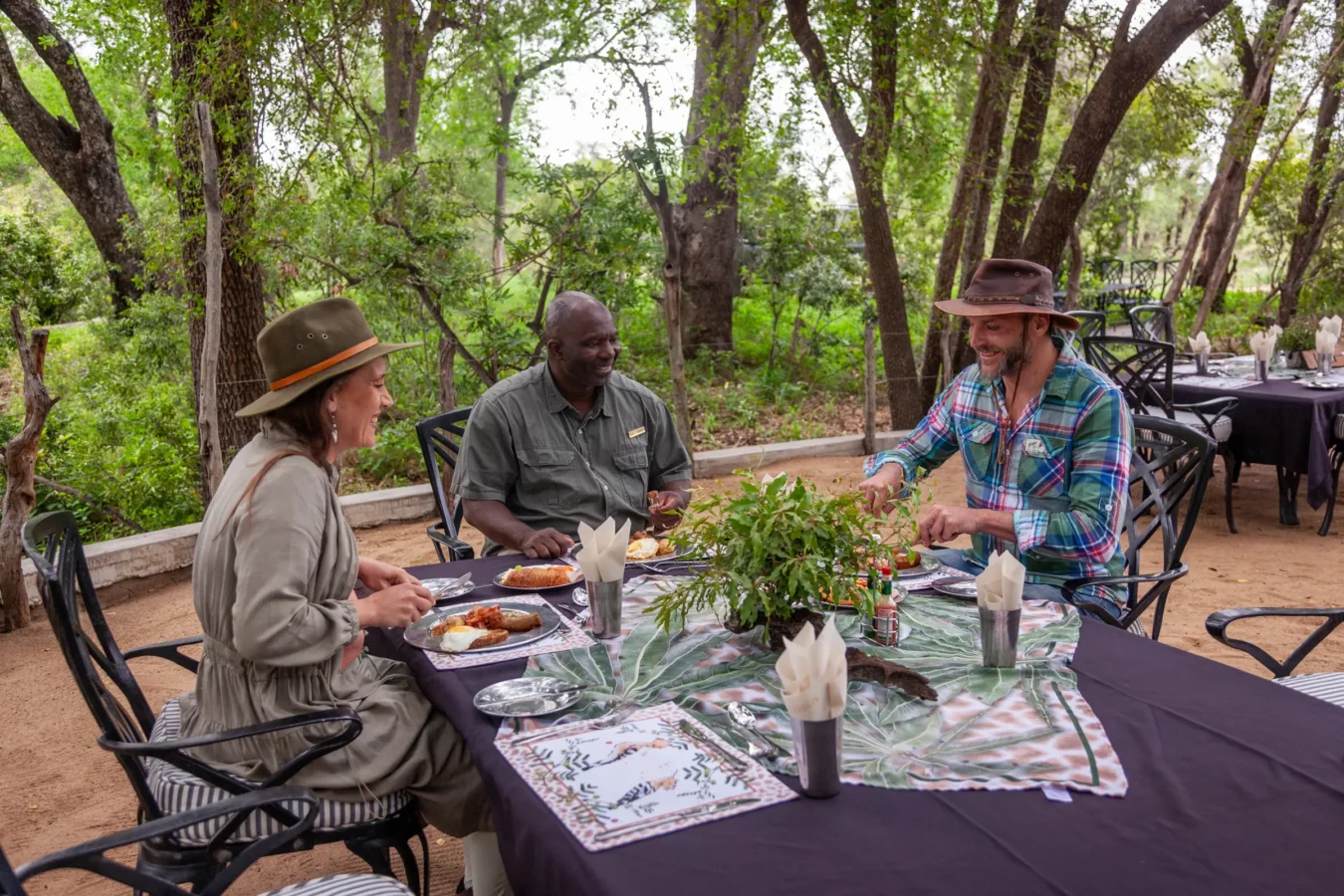
Your safari can be as much about the smaller details as the big sightings. Our expert Naturalist Guides and Wildlife Tracker teams are always happy to tailor conversations to your interests, whether you want to learn more about trees, birds, geology or the wider ecology of the Timbavati.
To begin planning your stay at Kings Camp, enquire with our team at book@kingscamp.com
Image credits:
Leopard in Leadwood tree: Cathan Moore
Leopard beneath fallen marula tree: Cathan Moore
Knob Thorn and Tamboti: David Becking on treesa.org
FAQs
What trees are found in the Timbavati?
The Timbavati is home to a diverse range of native trees, including marula, leadwood, mopane, knob-thorn, tamboti, jackalberry and red bushwillow. The distribution of these species varies according to factors such as soil, geology, water availability and habitat.
What is the most common tree in the Timbavati?
There is no single tree species that dominates the entire Timbavati, as the reserve contains a mosaic of different habitats. Mopane, marula and leadwood are among the prominent woodland species identified within the reserve.
Why are trees important in the Kruger?
Trees provide food, shelter and nesting sites for wildlife while also contributing to soil health, nutrient cycling and habitat structure. Species such as marula provide seasonal fruit, while mature and dead trees can provide important habitat for birds, insects and other animals.
What trees do elephants eat in the Timbavati?
Elephants browse on a variety of woody plants in the Timbavati, including marula, mopane, knob-thorn and tamboti. They may feed on leaves, branches and bark, and their browsing and tree-breaking behaviour can influence the structure of woodland over time.
Why are marula trees important to wildlife?
Marula trees provide browse, bark and seasonal fruit for a variety of wildlife. Elephants feed on several parts of the tree, while animals including giraffe, kudu, warthogs, baboons and monkeys can make use of its foliage or fallen fruit.
What is special about the leadwood tree?
Leadwood is known for its exceptionally dense and durable wood. Dead leadwood trees can remain standing in the landscape for many years, providing continued habitat and structure for birds, insects and other organisms even after the tree has died.
Can I learn about the trees while on safari at Kings Camp?
Yes. Safari is an opportunity to learn about much more than individual animal sightings. Kings Camp’s expert Naturalist Guides and Wildlife Tracker teams can help guests understand the plants, trees, geology and ecological relationships they encounter, and guests are always welcome to ask questions based on their particular interests.